Introduction
Vaccination is one of the simplest and most powerful ways to protect a dog. A few small injections in puppyhood, followed by booster shots through adult life, protect against diseases that are painful, expensive to treat, and often fatal. Many of these diseases have no cure, so prevention is the only real protection.
This guide explains which vaccines dogs need, when they are given, what the difference is between core and non-core vaccines, and what to expect after a vaccination. It is general information for dog owners, not a replacement for veterinary advice. Your veterinarian will adjust the schedule to your dog’s age, health, breed and lifestyle, and to the diseases common in your area.

Why vaccines matter
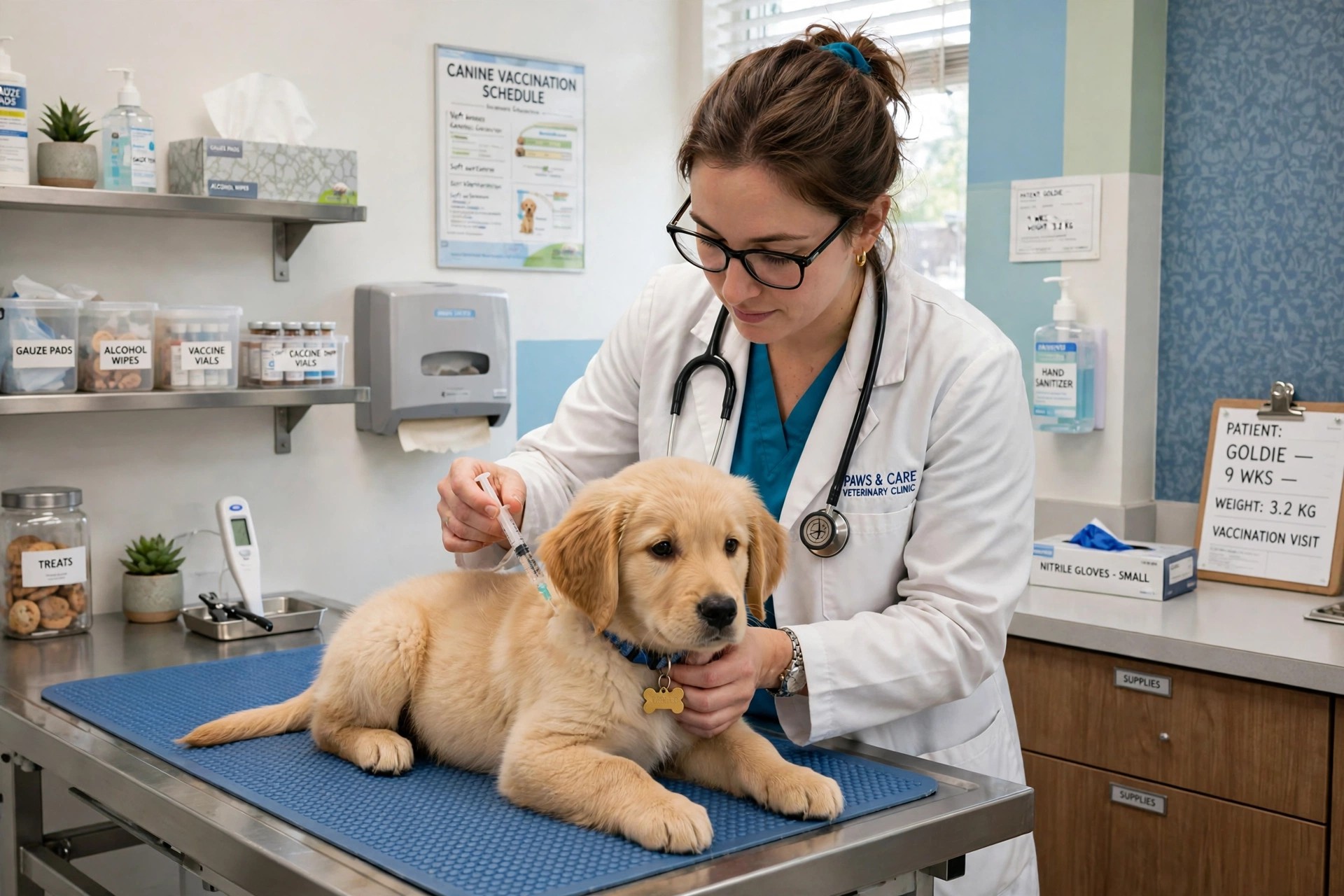
A vaccine teaches a dog’s immune system to recognise a disease before the real illness arrives. When the dog later meets the actual virus or bacteria, the body can fight it off quickly, often without the dog becoming ill at all. Without vaccination, a dog has no such protection, and diseases such as parvovirus, distemper and rabies can kill even a strong, healthy dog.
Vaccination also protects the community. When most dogs in an area are vaccinated, diseases spread less easily, and even unvaccinated dogs, such as very young puppies, are safer. This is one reason boarding kennels, training classes, groomers and many dog parks ask for proof of vaccination.
Core vaccines: the ones every dog needs
Core vaccines are recommended for every dog, whatever its lifestyle. They protect against diseases that are widespread, serious, and often fatal. The main core vaccines are rabies, distemper, parvovirus and adenovirus.
Rabies is a viral disease that affects the brain and is almost always fatal once signs appear. It spreads through the bite of an infected animal and can also spread to people, which is why rabies vaccination is required by law in many places. A puppy usually receives its first rabies vaccine at around three to four months of age, followed by a booster a year later, and then further boosters as the law and the vet require.
Distemper is a viral disease that affects the breathing, stomach and nervous system. It spreads through the air and through contact with infected animals, and it is often fatal. Puppies are especially at risk. Distemper vaccine is part of the standard puppy series.
Parvovirus, often called parvo, is a very contagious and serious illness that causes severe vomiting, bloody diarrhoea and dehydration, especially in puppies. The virus survives a long time in the environment, so a puppy can catch it from contaminated ground, bowls or shoes. Parvo vaccination is one of the most important shots a puppy receives.
Adenovirus causes infectious canine hepatitis, a disease of the liver, and is also linked to respiratory illness. The vaccine protects against both forms. It is usually given together with the distemper and parvo vaccines in one combined injection.
Non-core vaccines: given when the risk is there
Non-core vaccines are given when a dog’s lifestyle or location puts it at risk. Your veterinarian will decide which ones your dog needs.
Kennel cough vaccine protects against the bacteria and viruses that cause the dry, hacking cough often picked up where dogs gather, such as kennels, shelters, training classes and dog parks. It is often required by boarding kennels. It can be given as an injection or as a liquid into the nose.
Leptospirosis vaccine protects against bacteria spread through the urine of infected animals and through contaminated water and soil. The disease can damage the kidneys and liver, and it can spread to people. Dogs that swim, walk near water or live in rural areas are most at risk.
Lyme disease vaccine protects against a disease spread by ticks. It is recommended in areas where ticks carrying Lyme disease are common. Tick prevention is still needed alongside the vaccine.
Canine influenza vaccine protects against dog flu, a contagious respiratory illness that spreads quickly where dogs gather. It is recommended for dogs that visit kennels, day care, shows or dog parks, especially during outbreaks.
The puppy vaccination schedule
Puppies are born with some protection from their mother, but this fades in the first weeks of life. That is why the puppy series starts early and is repeated several times: each dose builds protection as the mother’s protection fades.
A typical puppy schedule looks like this. The exact ages and intervals vary, and your veterinarian will set the schedule for your puppy. The first visit is usually at six to eight weeks of age, when the puppy receives its first combined vaccine against distemper, parvovirus and adenovirus, and often a deworming treatment. Further doses follow every three to four weeks until the puppy is about sixteen weeks old. The rabies vaccine is usually given once, at around three to four months of age, as local rules require. A final puppy check at around sixteen weeks completes the early series, and the vet will also discuss flea, tick and worm prevention, feeding and microchipping.
Until the puppy series is complete, it is wise to be careful about where the puppy goes. Avoid areas where many unknown dogs have been, and avoid letting the puppy sniff faeces or drink from shared bowls. Short, safe outings for socialisation are still important, and your vet can advise how to balance safety with socialisation.
The adult dog vaccination schedule
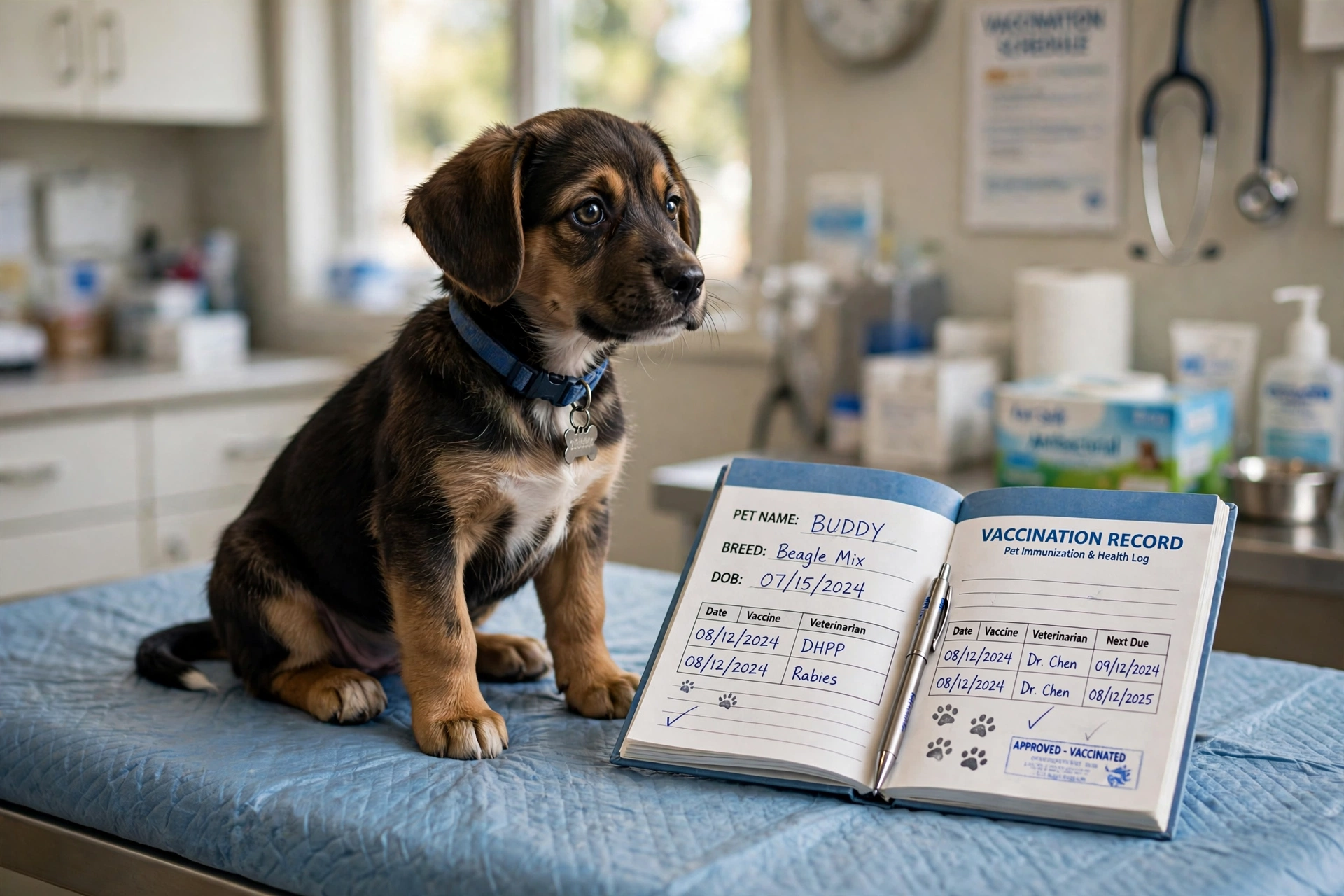
Adult dogs need booster shots to keep their protection strong. The timing depends on the vaccine and on local rules. Rabies boosters are often given a year after the first dose and then every one to three years, as the law requires. Distemper, parvovirus and adenovirus boosters are usually given every one to three years, depending on the vaccine used and the vet’s judgement. Non-core vaccines such as kennel cough and leptospirosis are often boosted yearly if the dog remains at risk.
A yearly vet visit is the best time to review vaccinations. The vet will check which boosters are due, examine the dog, and update the vaccination record. If you adopt an adult dog with an unknown history, the vet will usually restart the core vaccine series to be safe.
What to expect after a vaccination
Most dogs feel fine after a vaccination, though some are a little quiet or sore for a day. A small, tender swelling at the injection site is common and usually fades in a few days. Some dogs eat a little less or sleep more on the day of the shot. These mild reactions are normal and usually pass quickly.
Serious reactions are rare but possible. Signs to watch for include swelling of the face or muzzle, trouble breathing, repeated vomiting, diarrhoea, collapse or a very swollen injection site. If any of these appear, contact a veterinarian at once. Dogs that have had a reaction to a vaccine before should have it noted in their record, and the vet may take extra care at the next visit.
After a vaccination, keep the dog calm for the rest of the day, offer water and a normal meal, and avoid baths or heavy exercise for a day or two if the vet advises it. Keep the vaccination record safe, as kennels, groomers, trainers and travel often ask to see it.
Vaccination myths and facts
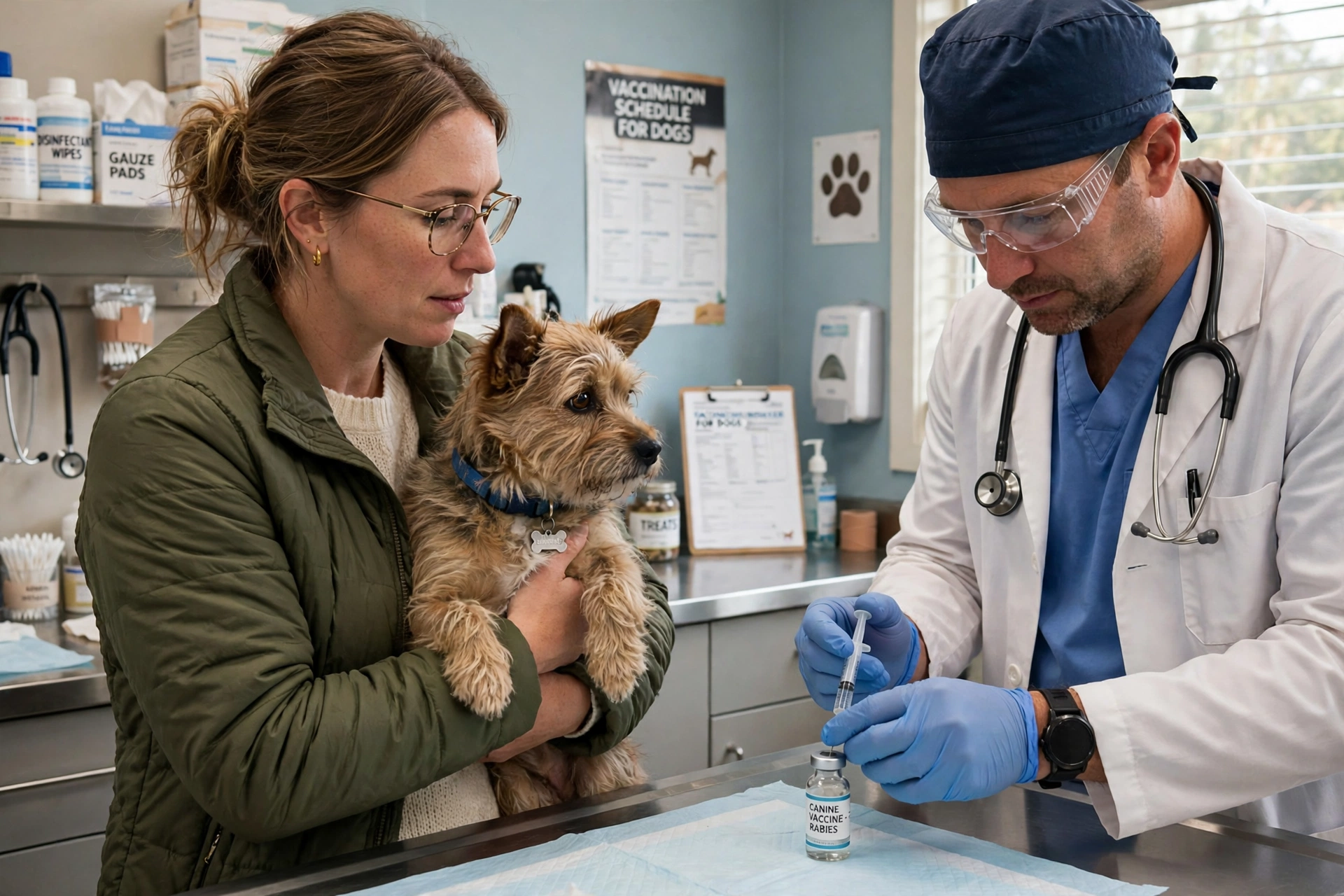
Many myths about dog vaccination circulate, and they can put dogs at risk. One common myth is that indoor dogs do not need vaccines. In fact, diseases such as parvovirus can be carried into the home on shoes, clothes and other objects, and rabies vaccination is legally required in many places whatever the dog’s lifestyle.
Another myth is that one puppy series protects a dog for life. Protection fades over time, which is why boosters matter. A third myth is that vaccines are more dangerous than the diseases. Serious vaccine reactions are rare, while the diseases themselves are common, painful and often fatal. A fourth myth is that old dogs do not need vaccines. Older dogs still need protection, though the vet may adjust the schedule for a dog with health problems. When in doubt, ask your veterinarian rather than trusting a rumour.
Vaccination records and proof
Keep a record of every vaccine your dog receives: the vaccine name, the date, and the next due date. Many vets give a vaccination card or booklet. Keep it with your dog’s other papers. A clear record makes vet visits easier, proves vaccination to kennels and groomers, and helps if you move or travel with your dog. If you change vets, take the record with you so the new vet can see what is due.
When to talk to your vet about vaccines
Talk to your veterinarian about vaccines at the first puppy visit, at every yearly check, and whenever your dog’s lifestyle changes, for example if you start boarding, day care, training classes, travel or walks in new areas. Also ask if your dog is pregnant, ill, very old, or taking medicines that affect the immune system, as the vet may adjust the plan. A short conversation at a routine visit keeps your dog protected without guesswork.
The cost of prevention against the cost of treatment
Vaccines are inexpensive compared with treating the diseases they prevent. Treating parvo, for example, can mean days in a veterinary hospital with fluids and intensive care, and even then the dog may not survive. A vaccine costs far less and prevents the suffering altogether. The same is true for distemper, rabies and the other core diseases. Prevention is not only kinder, it is cheaper.
For owners who find even routine vet care hard to afford, it is worth asking local vets and animal charities about low cost vaccination clinics. Some areas run vaccination days where core vaccines are given at a reduced price. Keeping a dog vaccinated is one of the most cost effective things an owner can do.
Vaccinating rescue and stray dogs
Rescue dogs, stray dogs and dogs with unknown histories need vaccination too, and often more urgently. A vet will usually give a full core vaccine series, because the dog’s earlier history cannot be trusted. Rescue organisations often vaccinate dogs before rehoming, and the new owner should ask for the record and continue the schedule. Stray dogs that are taken in should be checked by a vet as soon as possible, both for vaccination and for parasites and other health problems.
Conclusion
Vaccination is a small effort with a large reward. A puppy series and regular boosters protect a dog from some of the most dangerous diseases it can meet, and they protect other dogs and people too. The schedule is simple once you know it: start early, repeat the puppy doses, keep the rabies vaccine current, and review the plan with your veterinarian every year. If your dog is due a vaccine, or if you are not sure, a quick call to your vet is all it takes to get back on track.
Help Dogs Get Treatment: Support the Dog Hospital Trust
Not every sick dog has an owner who can pay for treatment, and not every dog gets the vaccines it needs. The Dog Hospital trust collects donations to pay for veterinary treatment, medicines, vaccinations and care for dogs in need. Your donation, large or small, helps a sick or injured dog get the treatment it deserves, and helps more dogs get vaccinated against deadly diseases.
You can donate through PayPal at vehari566@gmail.com, or by scanning the QR code below to donate through the trust’s TRC20 wallet. Every donation is voluntary, and keeping your payment receipt is a good idea. To learn more about the trust and how donations are used, visit the Donate page on this site. Thank you for helping dogs get treatment.
Frequently asked questions
Which vaccines does every dog need?
Every dog needs the core vaccines: rabies, distemper, parvovirus and adenovirus. Non-core vaccines such as kennel cough, leptospirosis, Lyme disease and canine influenza are given when the dog’s lifestyle or area puts it at risk.
When should a puppy get its first vaccines?
Usually at six to eight weeks of age, with further doses every three to four weeks until about sixteen weeks old. The rabies vaccine is usually given at around three to four months of age.
How often do adult dogs need boosters?
It depends on the vaccine. Rabies boosters are often every one to three years as the law requires, core boosters every one to three years, and some non-core vaccines yearly. Your veterinarian will set the timing.
Are vaccines safe for dogs?
Vaccines are very safe for most dogs. Mild soreness or tiredness for a day is common. Serious reactions are rare, but if a dog shows face swelling, trouble breathing, repeated vomiting or collapse after a vaccine, contact a veterinarian at once.
Do indoor dogs need vaccines?
Yes. Diseases such as parvovirus can be carried into the home on shoes and objects, and rabies vaccination is legally required in many places. Your vet can advise the right plan for an indoor dog.